







Table of Contents
Toggle


QUICK ANSWER
EPR compliance means that any business placing products or packaging on the market in Europe — including non-EU and US-based companies — is legally responsible for financing the collection, recycling, and disposal of that waste.
Who it applies to: Amazon sellers and eCommerce brands shipping packaged goods, electronics, or batteries to EU or UK consumers.
What you must do:
- Identify which EPR categories apply to your products (packaging, WEEE, batteries, textiles)
- Register with a Producer Responsibility Organisation (PRO) in every country where you sell
- Report your volumes and pay eco-contributions on schedule
- Upload valid EPR registration numbers to Amazon Seller Central
Consequences of non-compliance: Listing suspension on Amazon, withheld payouts, regulatory fines, and full market exclusion.
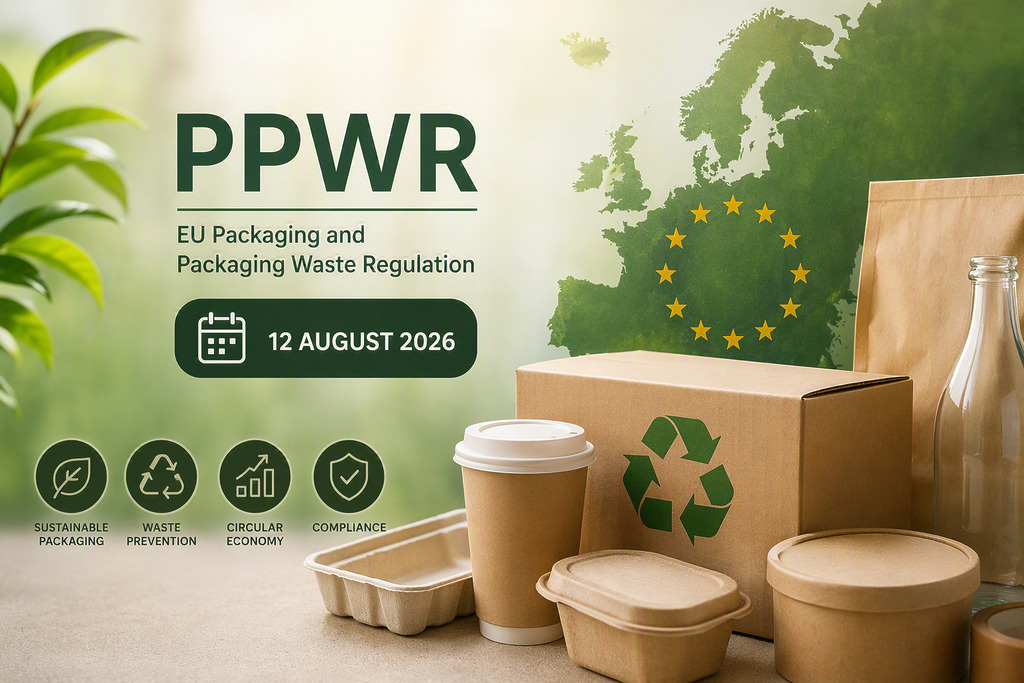
| ⚑ Critical 2026 deadline: EU Regulation (EU) 2025/40 — the PPWR — applies from 12 August 2026, introducing mandatory Authorised Representative (AR-EPR) requirements for all non-EU sellers selling packaged goods into the EU. |
If you sell on Amazon EU, there is a good chance you have already seen the message in Seller Central: upload a valid EPR registration number or face listing deactivation.
This is not a glitch. It is not a suggestion. And it is not Amazon’s job to fix it on your behalf.
Since Germany became the first country to block non-compliant listings in July 2022 — requiring all sellers to hold a valid LUCID packaging registration number before selling — European EPR enforcement has expanded rapidly. France, Spain, Austria, the Netherlands, Italy, and the UK have all followed. From 12 August 2026, the rules escalate again across the entire EU under the new Packaging and Packaging Waste Regulation (PPWR, Regulation EU 2025/40).
For US-based Amazon sellers entering European markets, or UK and EU brands scaling across borders, EPR compliance is no longer a background administrative concern. It determines whether your products stay live.
This guide tells you exactly what EPR compliance is, which products it covers, what each country requires, how to register step by step, and what happens if you wait too long.
| 📞 Not sure where your EPR obligations stand? Speak with AVASK’s EPR compliance team — we manage registration, reporting, and filing across 20+ countries, backed by our Infiniti 3.0 platform. |
Table of Contents
ToggleWhat Is EPR Compliance?
EPR compliance is the process by which a business meets its obligations under Extended Producer Responsibility (EPR) law. The underlying principle is straightforward: whoever places products or packaging on the market is financially responsible for managing that material at the end of its life — funding the collection, recycling, and disposal of waste.
Under every EPR framework in Europe, 201cproducer201d has a deliberately broad legal definition. You are considered a producer — and therefore responsible for EPR compliance — if:
- You manufacture a product in a country and sell it domestically
- You import products into a country where EPR legislation applies
- You sell products into a country where EPR legislation is in force — even via a marketplace like Amazon, and even if your company is incorporated outside that country
That third point is what catches most US sellers off guard. If your products reach German, French, or UK consumers — even through FBA warehouses you have never physically visited — you are a legal producer in those markets and must comply. The circular economy framework underpinning EPR is designed to hold cross-border businesses accountable, not to exempt them.
| FFor a broader introduction to environmental compliance, see AVASK’s environmental compliance overview. |
Which Products Does EPR Cover?
EPR is not a single regulation. It is a policy framework that applies across multiple product categories, each with its own rules, registration bodies, and deadlines. Most Amazon sellers will need to address at least two simultaneously.
Packaging EPR
The most universal category — applies to virtually every seller of physical goods. Almost everything shipped involves packaging: product boxes, poly mailers, void fill, protective wrapping, and the shipping carton Amazon uses to fulfil your order.
Key rules by market:
- Germany: VerpackG (Verpackungsgesetz — Packaging Act) requires registration in the LUCID Packaging Register before the first sale. No minimum volume threshold.
- France: Registration with an approved eco-organisation, primarily Citeo, is required. A unique identifier (IDU) must be uploaded to Amazon France.
- UK: The Producer Responsibility Obligations (Packaging and Packaging Waste) Regulations 2024 apply to businesses with annual turnover ≥ £1 million and handling 25 or more tonnes of packaging per year. PackUK is the UK scheme administrator.
WEEE — Waste Electrical and Electronic Equipment
Applies if you sell any product that uses electricity or contains an electronic component — computers, phones, smart devices, power tools, kitchen appliances, vaping products, smart home devices, and more. WEEE registration is mandatory before placing products on the market in Germany, France, Spain, Austria, the Netherlands, Italy, and most other EU member states.
Amazon began enforcing WEEE registration numbers across key European markets at the end of 2025 and into 2026. If you sell electronics in Europe and have not yet registered for WEEE, this is an immediate action item.
Batteries EPR
Applies if your product is a battery or contains one — a category spanning consumer electronics, toys, wireless accessories, power banks, and any device with a rechargeable or replaceable battery. The EU Battery Regulation (EU) 2023/1542 escalated enforcement significantly: from 18 August 2025, Amazon and eBay began requiring valid EPR battery registration numbers from all sellers across EU markets. Non-compliant listings were restricted immediately.
Additional Categories
France — and a growing number of other EU markets — extends mandatory EPR to textiles, furniture, DIY and gardening products, toys, and sporting and leisure goods. Single-use plastics (SUP) are mandatory in the UK, Germany, Austria, France, and Spain.
| EPR Category | DE | UK | FR | ES | IT | NL | AT | BE | PL | SE |
| Packaging | ✓ | ✓ | ✓ | ✓ | ✓ | ✓ | ✓ | ✓ | ✓ | ✓ |
| WEEE | ✓ | ✓ | ✓ | ✓ | ✓ | ✓ | ✓ | ✓ | ✓ | ✓ |
| Batteries | ✓ | ✓ | ✓ | ✓ | ✓ | ✓ | ✓ | ✓ | ✓ | ✓ |
| Textiles | ✓ | Planned | ✓ | — | — | — | — | — | — | — |
| Furniture | ✓ | — | ✓ | — | — | — | — | — | — | — |
| Single-Use Plastics | — | ✓ | ✓ | ✓ | — | — | ✓ | — | — | — |
| Toys | ✓ | — | ✓ | — | — | — | — | — | — | — |
Correct as of July 2026. EPR category coverage expands regularly — consult AVASK for the latest country requirements.
Are You a “Producer”? Who Must Comply
The most dangerous assumption in EPR is this: 201cI use FBA, so Amazon handles my compliance.201d
Amazon does not handle your EPR compliance. Amazon’s role is to enforce EPR rules — by collecting your registration numbers, suspending listings when you don’t have them, and, in some markets, automatically enrolling you in a paid Pay on Behalf service if you fail to act. Your obligation to register, report, and pay eco-contributions is entirely your own.
You are an EPR producer — and must comply — if you:
- Sell packaged physical goods on any Amazon European marketplace (Amazon.de, .fr, .co.uk, .es, .it, .nl, .se, .pl, .at, .be)
- Ship products directly to European consumers via your own website, Shopify store, eBay, or any other channel
- Import products into a European country, even if you never physically handle them in that country
- Are a brand owner, importer, packer/filler, or seller who “first places” products on the market in a given country
The FBA packaging question: FBA sellers are responsible for the product packaging they send into Amazon’s warehouses — the product box, inner packaging, and protective materials. Amazon is responsible for the shipping carton it uses to dispatch your order. If you sell through multiple channels, you must aggregate your total packaging tonnage across all channels when calculating your obligations.
UK thresholds: The UK distinguishes between large producers (annual turnover ≥ £2 million and ≥ 50 tonnes of packaging per year) and small producers (turnover ≥ £1 million and ≥ 25 tonnes). Both must register and report — large producers face more detailed bi-annual reporting requirements.
Non-EU and US-based sellers: EPR obligations are driven by where you sell, not where your company is incorporated. A US-based seller with no EU legal entity is still a producer in Germany, France, and the UK simultaneously if they sell into those markets. Under PPWR from 12 August 2026, this is made even more explicit with mandatory AR-EPR appointments for distance sellers.
EPR Compliance by Country: Registration, Deadlines & Fees
Every EU member state — and the UK — operates its own EPR scheme, with its own registry, fee structure, and enforcement authority. The table below covers the key markets for Amazon sellers, using registration timelines from AVASK’s operational data.
| Country | Key Registry / Authority | Primary Categories | Registration Time | Key 2026 Deadline / Notes |
| Germany | LUCID (Packaging) · Stiftung EAR (WEEE) · Separate battery register | Packaging, WEEE, Batteries, Textiles, Furniture, Toys | 12–14 weeks | Annual LUCID declaration: 15 May. No volume threshold — all sellers must register. |
| United Kingdom | PackUK · Environment Agency (RPD Service) | Packaging, WEEE, Batteries, SUP | 6–10 weeks | H2 2025 packaging data submission: 1 April 2026 |
| France | Citeo (Packaging) · ecosystem / Ecologic (WEEE) | Packaging, WEEE, Batteries, Textiles, Furniture, Toys | 4–6 weeks | IDU required in Seller Central. Broadest category scope in EU. |
| Spain | ECOEMBES (Packaging) · Multiple national SIGs for WEEE ⚠️ Verify with AVASK | Packaging, WEEE, Batteries, SUP | 6–8 weeks | Annual reporting; Amazon enforcement active |
| Italy | CONAI (Packaging) | Packaging, WEEE, Batteries | 6–8 weeks | Annual reporting |
| Netherlands | Afvalfonds Verpakkingen (Packaging) | Packaging, WEEE, Batteries | 2–4 weeks | Annual; Amazon enforcement active |
| Austria | ARA (Packaging) | Packaging, WEEE, Batteries, SUP | 12–14 weeks | Amazon enforcement active. One of the longest lead times — start early. |
| Belgium | Fost Plus (Packaging) | Packaging, WEEE, Batteries | 4–6 weeks | Annual reporting |
| Poland | BDO Register | Packaging, WEEE, Batteries | 4–6 weeks | Annual; Amazon enforcement active |
| Sweden | Förpackningsinsamlingen (fmr. FTI) | Packaging, WEEE, Batteries | 1–2 weeks | Annual reporting |
Registration timelines are estimates from AVASK operational data and may vary. Germany and Austria have the longest lead times — begin the process at least 3 months before your planned launch date.
Germany — The Strictest and Most Actively Enforced Market
Germany’s VerpackG requires every company placing packaging on the German market to register with the LUCID Packaging Register before making a single sale. Unlike the UK, there is no minimum volume threshold — one unit sold in packaging triggers the obligation. WEEE registration is handled separately via Stiftung EAR, and batteries through a separate designated register. Amazon has been blocking German listings without valid registration numbers since July 2022.
United Kingdom — PackUK, Thresholds, and Bi-Annual Reporting
Post-Brexit, the UK runs an entirely separate EPR system from the EU. PackUK administers the scheme and distributes fee revenues to local authorities. Large producers must submit packaging data twice a year; small producers submit annually. The next submission deadline for H2 2025 data (1 July–31 December 2025) is 1 April 2026 for both large and small producers.
| For a comprehensive breakdown of UK-specific obligations, thresholds, and step-by-step guidance, see our dedicated UK EPR compliance guide for eCommerce sellers. |
France — IDU Numbers and the Broadest Category Scope
French packaging EPR is primarily managed through Citeo, which issues the unique identifier (IDU) that Amazon France requires from all sellers. Without a valid IDU, your French listings are at risk of suspension. France extends mandatory EPR to textiles, furniture, and toys — giving it the widest category scope of any EU market for online sellers.
Austria — Long Lead Times, Active Enforcement
Austria has followed the German enforcement model closely, with Amazon Austria actively checking EPR registration numbers. Registration times for packaging reach 12–14 weeks, making Austria one of the most time-sensitive markets to start.
| See our dedicated Austrian EPR guide for Amazon sellers for the full picture. |
How to Register for EPR Compliance: 5 Steps
| 🔧 Prefer to skip the admin? AVASK’s EPR team manages all five steps across every country and category — from initial assessment through annual filings. |
EPR registration follows a consistent structure across markets, even though the specific portals and authorities differ by country:
- Determine your producer statusAssess whether your business meets the legal definition of “producer” in each country you sell into. Consider your product categories, packaging types, business structure, annual turnover, and packaging tonnage. This assessment should happen before your first sale in a new market — not after Amazon contacts you.
- Identify the EPR categories that apply to your productsMap your product catalogue against the applicable streams: packaging, WEEE, batteries, and any extended categories relevant to the markets you sell in. Use actual packaging weights rather than estimates — the volumes you report directly determine your eco-contribution fees.
- Register with the relevant authority or PRO in each countryA Producer Responsibility Organisation (PRO) is a government-approved body that manages EPR obligations on behalf of producers. In most countries, you join a PRO scheme — for a service fee, the PRO handles filing and eco-contribution payments to national authorities on your behalf. This is the recommended route for sellers managing compliance across multiple countries.
- Obtain your EPR registration number(s)Upon successful registration, you receive a unique identifier per country, per category. These are what Amazon requires you to upload in Seller Central: your LUCID number (Germany packaging), Stiftung EAR number (Germany WEEE), IDU (France), or RPD registration confirmation (UK). Without valid numbers uploaded, listings remain at risk of deactivation.
- Submit volume reports and pay eco-contributions on scheduleOnce registered, you enter an ongoing cycle: submit data on the packaging or products placed on the market, and pay eco-fees based on those volumes. Reporting cadence varies — the UK requires bi-annual submission for large producers; Germany requires an annual LUCID declaration by 15 May.
| 🔧 How the AVASK Infiniti 3.0 Platform WorksAVASK’s Infiniti 3.0 platform connects directly to Amazon, Shopify, eBay, WooCommerce, and other marketplace APIs — automatically retrieving your sales and packaging data, calculating your EPR obligations by country and category, and filing directly with the relevant authorities.No spreadsheets. No manual submissions. No compliance blind spots. Audit-ready documentation built in.Data retrieval: automated ingestion from your connected marketplace accountsCalculation engine: EPR obligation calculation across Direct and Pay on Behalf schemesFiling: direct submission to authorities in covered jurisdictionsDashboard: real-time visibility of filings, registrations, and status across all markets Explore AVASK’s EPR compliance platform → |
EPR Compliance and Amazon: What Every Seller Must Know
Amazon’s enforcement of EPR compliance is the most immediate practical risk for sellers who have not yet registered.
How Amazon Enforces EPR
Amazon requires sellers to upload EPR registration numbers for each applicable product category and country through the Seller Central Compliance Portal. The enforcement mechanism differs by market:
Listing deactivation is the default in Germany, the Netherlands, Poland, and Sweden. Products are blocked until a valid registration number is uploaded and verified. There is no grace period and no advance warning.
Pay on Behalf enrolment is applied in France, Spain, and the UK when sellers have not independently registered. Amazon handles the EPR filing on your behalf — but charges you for the privilege. This is materially more expensive than self-registration and removes your control over the compliance process. If your eco-contribution volumes are significant, the surcharge alone can reach hundreds or thousands of pounds per year.
| Amazon’s Pay on Behalf policy was updated on 27 August 2025, unifying rules across the UK, Spain, and France. Read the full breakdown of what changed and what it means for your costs. |
The August 2025 Batteries Deadline — and What It Means Now
From 18 August 2025, Amazon and eBay required valid EPR battery registration numbers from all sellers offering batteries or battery-containing products across EU markets. Sellers without valid numbers faced immediate listing restrictions. If you sell any battery-powered products and have not yet registered in all relevant markets, this is an active compliance gap.
PPWR August 2026 — Platform Verification Expands
Under Regulation (EU) 2025/40, online marketplaces will carry expanded legal obligations to verify seller EPR compliance from 12 August 2026. Amazon will be under greater pressure to enforce comprehensively across all EU markets and product categories — which means the already-strict enforcement environment will only tighten from that date forward.
PPWR 2026: What the New EU Packaging Regulation Changes
| ⚑ Key date: Regulation (EU) 2025/40 (PPWR) applies from 12 August 2026, repealing the existing Packaging Directive. Non-EU sellers must have AR-EPR appointments in place before this date. |
The Packaging and Packaging Waste Regulation (PPWR) is the most significant reform of EU packaging law in decades. For Amazon sellers and eCommerce brands, three changes matter most:
1. Harmonised Producer Register Logic Across All EU Member States
Previously, every EU country had its own registration infrastructure with differing rules and portals. The PPWR moves toward a more consistent framework: producers register in each member state where they first make packaging available, with a standardised 1 June annual reporting reference date across the EU.
2. Mandatory Authorised Representative for EPR (AR-EPR)
This is the most significant change for US sellers. Producers established outside the EU who sell packaged goods into EU member states via distance selling must appoint a formally designated Authorised Representative for EPR (AR-EPR) in each member state where they sell. The AR-EPR assumes the producer’s legal compliance obligations in that country — registration, reporting, authority communication, and fee payments.
Without an appointed AR-EPR from 12 August 2026, non-EU sellers lose the right to place packaged goods on those markets. AVASK can act as your AR-EPR across EU member states.
3. Eco-Modulated Fees Tied to Packaging Recyclability
Under the PPWR, EPR fees will be adjusted (eco-modulated) based on the environmental performance of your packaging — recyclability, recycled content, and material type. Sellers using non-recyclable packaging will pay more. This creates a direct financial incentive to move toward sustainable packaging design and has implications for cost modelling and supplier negotiations.
| For a full breakdown of PPWR requirements and the August 2026 timeline, see PPWR 2025: What the EU’s new packaging rules mean for your business. |
The Consequences of Non-Compliance
EPR non-compliance is not an administrative risk. It is a business continuity risk. Here is what sellers actually face:
- Market exclusion — Germany has banned non-compliant listings since 2022. Austria, the Netherlands, and France operate the same model. PPWR will extend consistent enforcement across all EU member states from August 2026.
- Amazon listing suspension — deactivation is immediate once Amazon’s system flags a missing or invalid registration number. Reinstatement requires submitting valid registrations, which can take weeks or months from scratch.
- Withheld payouts — Amazon can hold disbursements pending EPR compliance documentation, creating a direct and immediate cash flow impact.
- Regulatory fines — national EPR authorities impose fines on non-compliant producers. Fine levels vary by country; repeat or deliberate non-compliance typically results in substantially higher penalties and potential distribution bans.
- Retrospective fee liability — registering late does not erase your obligation for periods when you were already selling. You will owe eco-contributions going back to when your obligation first arose, even if you were not yet registered at the time.
The safest and most cost-effective approach is to register before you sell — not after your listings are suspended or a regulatory letter arrives.
Frequently Asked Questions About EPR Compliance
What is EPR compliance, exactly?
EPR compliance means meeting your legal obligations under Extended Producer Responsibility law. In practice: registering with the relevant national authority or Producer Responsibility Organisation (PRO) in every country where you sell, reporting the types and volumes of products or packaging you place on the market, and paying eco-contributions to fund recycling and waste management. The specific requirements vary by country and product category.
Does EPR compliance apply to US-based or non-EU companies?
Yes — unconditionally. EPR obligations are determined by where you sell, not where your company is incorporated. A US-based Amazon seller whose products reach consumers in Germany, France, or the UK is legally a producer in those markets and must comply. The PPWR, effective 12 August 2026, makes this even more explicit with the mandatory AR-EPR requirement for non-EU distance sellers.
Do I need EPR compliance for Amazon specifically?
If you sell on any Amazon European marketplace — Amazon.de, .fr, .co.uk, .es, .it, .nl, .at, .be, .pl, .se — you need EPR compliance for at least packaging. WEEE and batteries compliance will also apply depending on your product categories. Amazon requires sellers to upload valid EPR registration numbers to Seller Central; without them, listings are deactivated or you are automatically enrolled in the costlier Pay on Behalf service.
What is the difference between packaging EPR and WEEE?
Packaging EPR applies to the materials used to package your products — boxes, wrapping, void fill, poly mailers. WEEE applies to the products themselves if they run on electricity or contain electronic components. Many Amazon sellers face both simultaneously: if you sell a Bluetooth speaker, you face packaging EPR for the box and WEEE EPR for the device. Batteries EPR is a third, separate stream applying if the product is or contains a battery.
What is PPWR and when does it apply?
PPWR is the Packaging and Packaging Waste Regulation — Regulation (EU) 2025/40. It replaces the existing Packaging Directive and applies from 12 August 2026. For non-EU sellers, the most important change is the mandatory Authorised Representative for EPR (AR-EPR) requirement: you must appoint a formally designated representative in each EU country where you sell packaged goods via distance selling. The PPWR also harmonises EPR registration rules across the EU and introduces eco-modulated fees linked to packaging recyclability.
How does AVASK help with EPR compliance?
AVASK manages the full EPR journey — from initial producer status assessment and country-by-country registration, through volume reporting, eco-contribution payments, and ongoing regulatory monitoring. Our Infiniti 3.0 platform connects to Amazon, Shopify, eBay, and other marketplace APIs to automatically retrieve your data, calculate obligations, and file with authorities directly. We also act as Authorised Representative (AR-EPR) for non-EU sellers under the PPWR. See our full EPR services or environmental compliance overview.
What happens if I miss an EPR registration or reporting deadline?
In the UK, missed submission deadlines result in late fees and potential enforcement action. In Germany, selling without a valid LUCID registration can result in an immediate distribution ban and significant fines. On Amazon, missing registration deadlines typically results in listing deactivation or automatic Pay on Behalf enrolment at an additional cost. Retrospective reporting obligations may also apply. See our EPR FAQ guide for more detail on specific country consequences.
Is EPR compliance the same in every European country?
No. Every country has its own EPR legislation, registration body, reporting requirements, fee structure, and enforcement timeline. Germany’s VerpackG, France’s AGEC law, the UK’s Producer Responsibility Obligations Regulations 2024, and Spain’s packaging waste framework are all distinct — with different portals, thresholds, and deadlines. Managing EPR across five or ten countries without specialist support is extremely complex, which is why most cross-border sellers work with a firm like AVASK that handles all jurisdictions from a single platform. See our EPR FAQ guide for more.
Summary: Your EPR Compliance Checklist
EPR compliance is a legal requirement across every major European market. For Amazon sellers and eCommerce brands expanding to the EU and UK, the obligations are clear — and the consequences of ignoring them are immediate.
Before you sell into any new European market:
✅ Confirm whether your products meet the definition of “producer” in that country
✅ Identify which EPR categories apply — packaging, WEEE, batteries, and any extended categories
✅ Register with the relevant authority or PRO before your first sale (Germany, Austria — allow 12+ weeks)
✅ Obtain your EPR registration number(s) and upload them to Amazon Seller Central
✅ Set up a reporting and payment schedule for ongoing eco-contributions
For sellers already active in EU/UK markets:
✅ Audit your current EPR status by country and category — do you have valid numbers everywhere you sell?
✅ Check whether you are enrolled in Amazon Pay on Behalf — and whether self-registration would be cheaper
✅ Confirm your Authorised Representative (AR-EPR) position ahead of the PPWR 12 August 2026 deadline
✅ Review your packaging materials for PPWR eco-modulation implications
Ready to get ahead of the 12 August 2026 deadline?
Navigating EPR compliance and now PPWR requirements across multiple EU countries can feel overwhelming, especially if you’re managing it alongside day-to-day operations. Contact AVASK today to review your obligations and find out how we can support your business through this transition.